
01 / The composed image
The intention.
In the photograph.
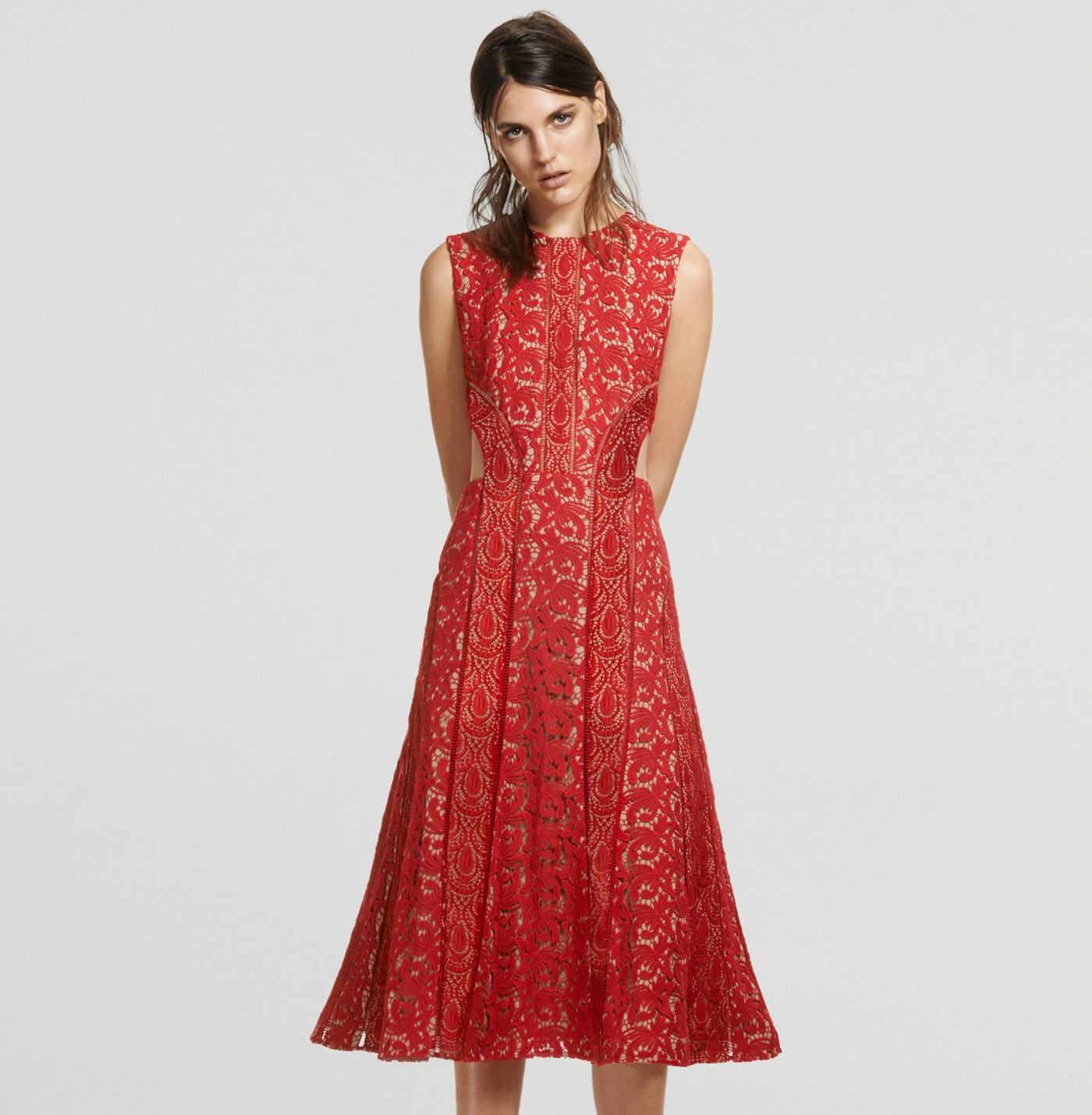
A studio portrait brings the garment, styling and pose together in a considered image. It establishes a visual world and gives the collection a clear expression.
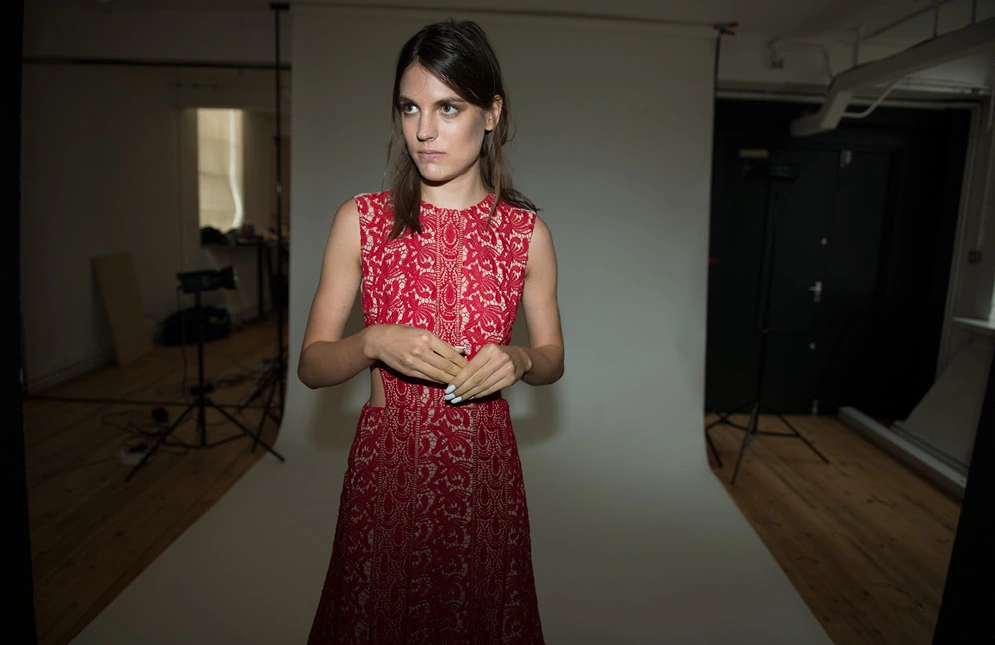
For Self-Portrait, we wanted the product page to offer another kind of view alongside that composed presentation: the model wearing the clothes backstage, between takes.
02 / Between takes
Let another moment
into the picture.
We made backstage part of the product detail. The unretouched photographs showed the same garment in the setting of the shoot, with a different posture, gesture and atmosphere.
The contrast expanded what someone could see. The studio image communicated the presentation; backstage supplied another moment with the person still wearing the clothes.
03 / Two kinds of information
Look at the clothes.
Look at the person.
These images are different photographs of the same dress, rather than a before-and-after retouching comparison. Their value comes from the change of context.
A photograph cannot promise how a garment will fit another person. It can, however, give them more to observe: how the fabric sits, how the silhouette changes with a pose and how the piece appears beyond one prepared view.
The design question remains useful: what extra image would help someone understand the product? Choose it for the information it contributes, then give it enough space to be examined.
From the archive / 2013–2014
An early product-page study, archived in September 2013, brings studio views, close details and backstage photographs together. The team’s recollection explains their intended role in the product experience. See the original study in the project case.
A retrospective written in 2026, using the studio archive and the team’s recollections of the original work.