
Move across the image / A · B · C
01 / The browsing moment
More of the garment.
In the same space.
A single front-facing photograph leaves much of a garment unseen. We wanted collection browsing to reveal more before asking someone to open the product page.
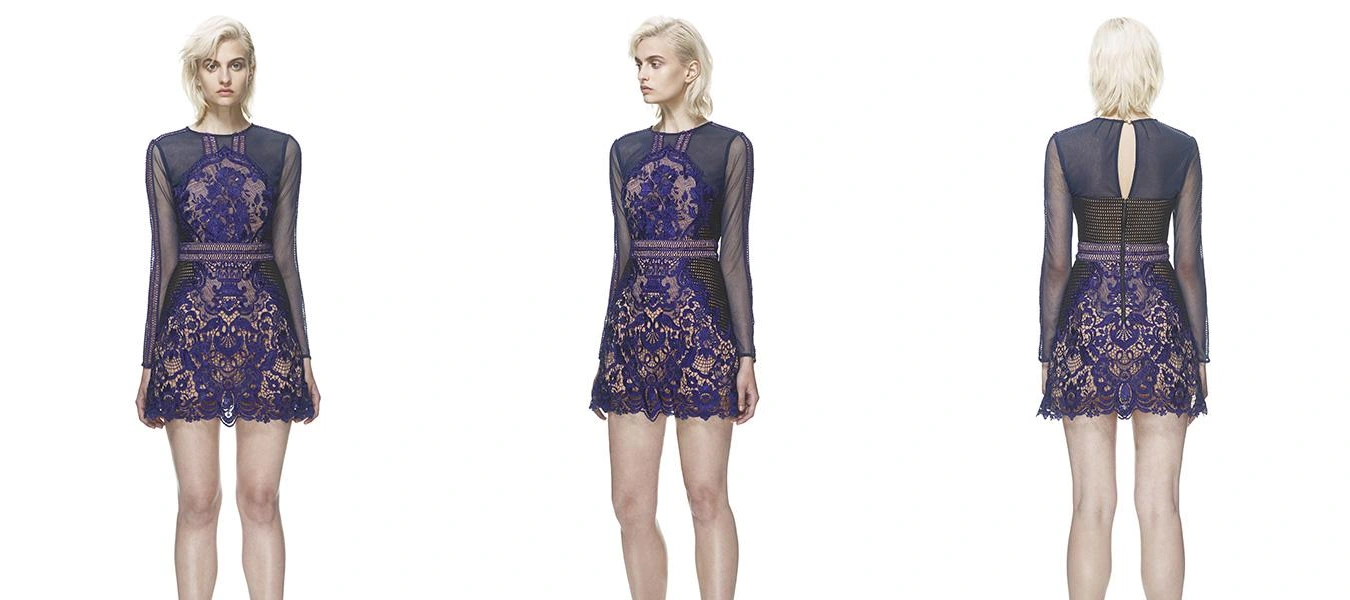
The image frame stayed in place. Moving across it revealed three views: the front, a turn and the back. A small movement could answer a visual question without interrupting the gallery.
02 / Three zones
The cursor
chose the view.
The original interaction divided the frame into three equal zones from left to right. The left third showed A, the middle B and the right C. Three photographs were arranged in one image strip, which moved behind the frame to reveal the appropriate view.
This study recreates that behaviour with original product photographs. Buttons and arrow-key controls make the same three views available without relying on hover.
03 / What changes
A turn can explain
what a front view cannot.
The shoulder, the line of the waist and the construction at the back become easier to understand when the view changes. The garment gains depth while the browsing layout remains steady.
The interaction belonged to a wider approach: generous product photography, close details and backstage images. Each offered another way to look at the same piece.
04 / Keep the task clear
Movement should
reveal something.
The useful part was the additional view. The movement was simply how the person reached it.
For an image interaction, ask what becomes clearer after using it. If the answer is a detail someone needs to compare or understand, the behaviour has a purpose. Keep a direct alternative available for touch and keyboard users.
From the archive / 2013–2014
The archive preserves three-view product compositions and early website studies. The horizontal-third behaviour is documented here from the team’s account; the example is a present-day recreation using archived photography.
A retrospective written in 2026, using the studio archive and the team’s recollections of the original work.